The book introduces probabilistic graphical models (PGMs) a framework combining probability theory and graph theory as a powerful way to model uncertain, noisy, or complex data. It shows how to implement PGMs in practice using the programming language R, with real world problems and illustrative code examples.
-

Learning Probabilistic Graphical Models in R
Auteur: David Bellot
Learning Probabilistic Graphical Models in R
- Auteur: David Bellot
- ISBN: 978-1-78439-205-5
-
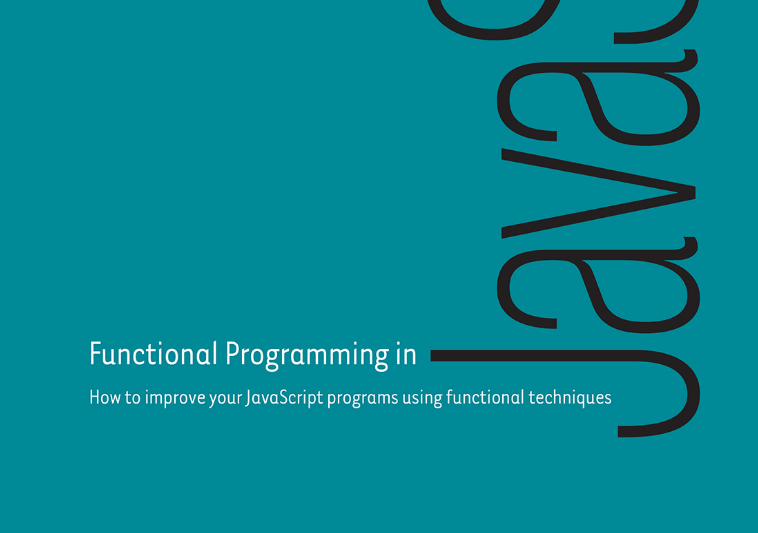
Functional Programming in JavaScript
Auteur: LUIS ATENCIO
Functional Programming in JavaScript
- Auteur: LUIS ATENCIO
- ISBN: 9781617292828
Functional Programming in JavaScript by Luis Atencio is a comprehensive guide to applying functional programming (FP) principles using JavaScript. The book introduces the core concepts of functional programming and demonstrates how to leverage them in the context of JavaScript, a language traditionally associated with imperative programming and object-oriented patterns.
-

Property-Based Testing with PropEr, Erlang, and Elixir
Auteur: Fred Hebert
Property-Based Testing with PropEr, Erlang, and Elixir
- Auteur: Fred Hebert
- ISBN: 978-1-68050-621-1
Property-based testing is a method of testing software by specifying properties that the code should adhere to, then testing it by generating random data to try and break those properties. In this book, Fred Hebert shows you how to use PropEr, a property-based testing tool for Erlang, and how the same concepts apply to Elixir. He takes you through the key concepts, tools, and techniques to use property-based testing in your day-to-day software development
-

Programming Erlang, Software for a Concurrent World
Auteur: Joe Armstrong
Programming Erlang, Software for a Concurrent World
- Auteur: Joe Armstrong
- ISBN: 978-1-937785-53-6
A multi-user game, web site, cloud application, or networked database can have thousands of users all interacting at the same time. You need a powerful, industrial-strength tool to handle the really hard problems inherent in parallel, concurrent environments. You need Erlang. In this second edition … you’ll learn how to write parallel programs that scale effortlessly on multicore systems.
-

Learn You Some erLang for great good!
Auteur: Fred Hébert
Learn You Some erLang for great good!
- Auteur: Fred Hébert
- ISBN: 1-59327-435-1
The book is structured in a highly accessible, humorous, and engaging style, making it easier for readers to grasp complex concepts. The author walks readers through the fundamentals of Erlang, focusing on its functional programming model, concurrency model (based on lightweight processes), and its famous "let it crash" philosophy for fault tolerance. It is designed to appeal to developers new to Erlang and functional programming, but also provides useful insights for more experienced programmers.
-
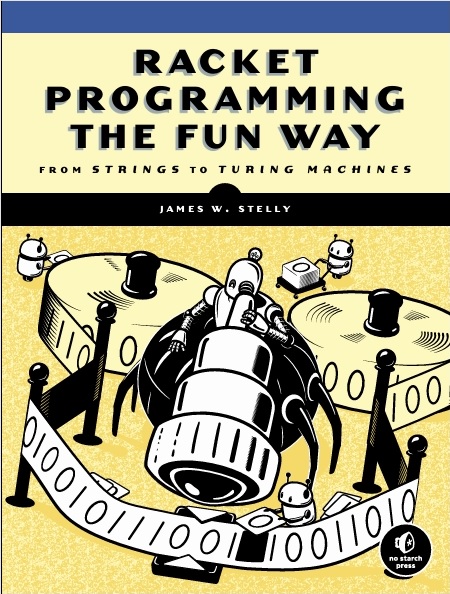
RACKET PROGRAMMING THE FUN WAY
Auteur: James W. Stelly
RACKET PROGRAMMING THE FUN WAY
- Auteur: James W. Stelly
- ISBN: 978-1-7185-0083-9
-
-
Edinburgh LCF
Auteur: Gordon, Michael J
Edinburgh LCF
- Auteur: Gordon, Michael J
- ISBN: 0-387-09724-4
Edinburgh LCF is a computer system for doing formal proofs interactively. This book is both an introduction and a reference manual for the complete system (and its DECsystem-10 implementation). The acronym LCF stands for \"'Logic for Computable Functions\"' - a logic due to Dana Scott in which facts about recursively defined functions can be formulated and proved. The original system (developed at Stanford University) was a proof checker for this logic, based on the idea not of proving theorems automatically, but of using a number of commands to generate proofs interactively step by step. The emphasis then was on exploring the class of problems that could conveniently be represented in the logic, and on discovering the kinds of patterns of inference that arose when solving these problems. It was found that, by and large, the original logic was expressive enough, although a few useful extensions were suggested. However, the fixed repertoire of proof-generating commands often required long and very tedious interactions to generate quite simple proofs; furthermore these long interactions often consisted of frequent repetitions of essentially the same sequence of inferences., Series: LNCS0078, Edition: 1
-
Functional Programming Using Standard ML
Auteur: Wikstrom Ake
Functional Programming Using Standard ML
- Auteur: Wikstrom Ake
- ISBN: 0-13-331968-7
-
-

Elements of ML Programming
Auteur: Jeffrey D. Ullman
Elements of ML Programming
- Auteur: Jeffrey D. Ullman
- ISBN: 0-13-790387-1
Written by a well-known computer science education and researcher. No previous knowledge of ML or functional programming is assumed. This is the first book that offers BOTH a highly accessible, step-by-step introductory tutorial on ML programming and a complete reference to, and explanation of, advanced features. The author uses a wide variety of digestible program examples to bring the reader along at a reasonable pace. More sophisticated programs and advanced concept topics balance out a book that is usable in a number of courses and settings for either self-study or class discussion.
-
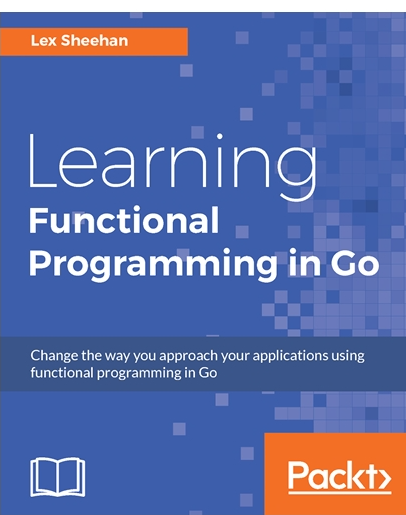
Learning Functional Programming in Go: Change the way you approach your applications using functional programming in Go
Auteur: Lex Sheehan
Learning Functional Programming in Go: Change the way you approach your applications using functional programming in Go
- Auteur: Lex Sheehan
- ISBN: 978-1-78728-139-4
-
-
Making reliable distributed systems in the presence ofsodware errors
Auteur: Joe Armstrong
Making reliable distributed systems in the presence ofsodware errors
- Auteur: Joe Armstrong
- ISBN:
-
-

Erlang
Auteur: Tutorials Point
Erlang
- Auteur: Tutorials Point
- ISBN:
-